
Technical SEO Boost = Rankings Boost
Need a core web vitals pick-me up? We did just that and helped propel page rankings and site performance for two very different sites.
Overview:
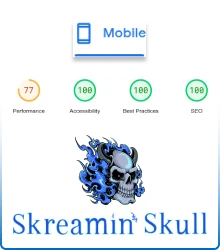
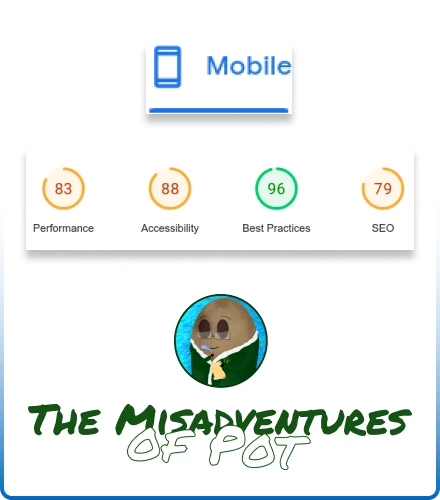
Skreamin’ Skull, a fitness and hobby site, and The Misadventures of Pot, an up-and-coming entertainment brand, were looking to improve their Google Lighthouse scores. Both sites also had a few pages that were steadily gaining traction, despite the odds stacked against them. The team set to work, conducting an SEO audit and implementing the necessary changes to provide the boost they needed. It was a success with their average page rankings increasing over by two pages or more within days of the changes. To accomplish this, they needed an entire redesign for the structure of their site.
Key fixes to achieve this:
- Keyword research and optimization
- Optimizing images for performance
- Accessibility and ensuring proper Schema markup.
Issues:
These two sites had a few overlapping issues that were hindering their abilities to rank and get indexed. Namely, in accessibility and performance tabs. This was a combination of slow loading times (especially on mobile) due to large images, no lazy loading, a lack of descriptive alt-text and anchor text, and similar issues.
Why were these problems? Well, some of them were affecting the user experience and some were causing issues for search engines to properly index and know when to serve the pages. They aren’t entirely exclusive either. Most of these were overlapping, and if they were a Venn Diagram, you’d find a lot of them in the middle. But, let’s get into what exactly were their issues.
- Poor page speed insight scores across performance, accessibility, best practices, and SEO. This meant slow loading times, poor user experience, usability issues, and not meeting modern web standards.
- Limited search engine visibility. Lower page scores and insufficient meta data can cause issues with Google, and other search engines, indexing the site. If your site isn’t indexed, you’re not getting found.
- Inefficient resource loading. Both sites had large image files, unoptimized CSS & JS, and a few other missing components that led to slow page load speeds, especially on mobile and overall just made inefficient use of data.
- Unoptimized missing meta information. On-page content is ultimately the most important, without a doubt. However, missing, or underutilized, meta descriptions and title tags means less information for users and indexes.
Solutions:
To solve the performance issues, we first optimized all image assets ensuring they were correctly sized and utilized newer formats such as WebP and AVIF. We chose the aforementioned due to strong browser support and increased compression as to not waste precious load time with bloated sizes. This increased comprression cut the file sizes down dramatically, but the browsers still wasted resources by calling images they hadn’t even gotten to yet and ones too large for smaller devices. To combat this, we implemented picture elements and source sets to make the images responsive and lazy loaded to only load when the image was needed.
Next, we ensured all images had appropriate alt-text for usability and search engine crawling. The structure of the site also received a face-lift to ensure all HTML was neat and orderly.
The last major step was keyword research and plan. We narrowed down a handful of keywords to focus on for each page to help prevent cannibalization and improve context. We used a mixture between Google Ad’s keyword planner and tools like Semrush to find best keywords for Skreamin’ Skull and The Misadventures of Pot to target.
Finally, the true last step was to get everything indexing on Google Search Console. Updated XML sitemaps were submitted, appropriate redirects put in place as needed, and some manual validations or requests for indexing were submitted.
Results:
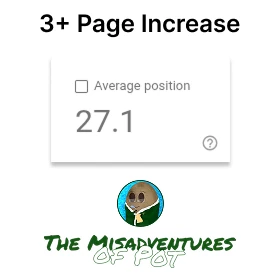
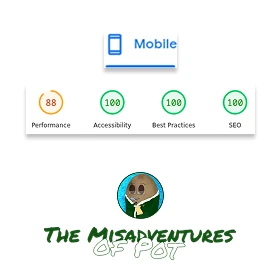
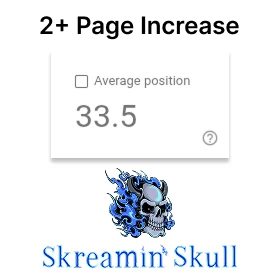
Improved performance and all scores meeting, exceeding thresholds. Each page has the appropriate canonical in Google Search Console, ensuring that the site owners are getting the pages they need indexed and served. They saw an increase in organic search visibility with page ranking averages going up two or more pages for the overall sites within days of implementing these changes. Page views also saw an increase and bounce rates saw a decrease, indicating better performance and user experience.
